Why Zoning Matters
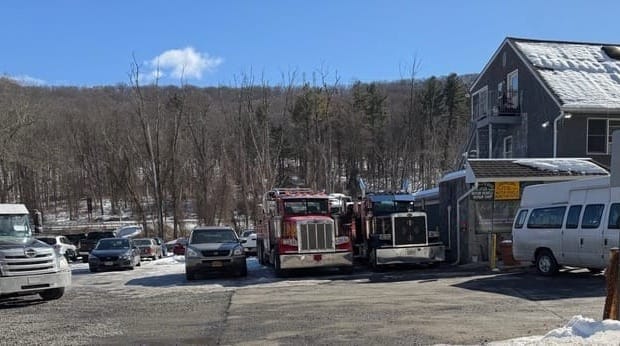
If ever Putnam Valley needed an example of why zoning matters, the case involving Citywide Automotive & Towing on Peekskill Hollow Road is it.
Last May, the owners of that well-regarded auto repair company submitted an application to the Planning Board for permission to construct a 100 ft. by 51 ft. two-story building so they could store damaged vehicles there. In an effort to keep the building and any leaking fluids from those damaged vehicles as far from the Peekskill Hollow Creek and the wetlands area on the property as possible, the Planning Board staff encouraged Citywide to move its proposed building right up against Peekskill Hollow Road.
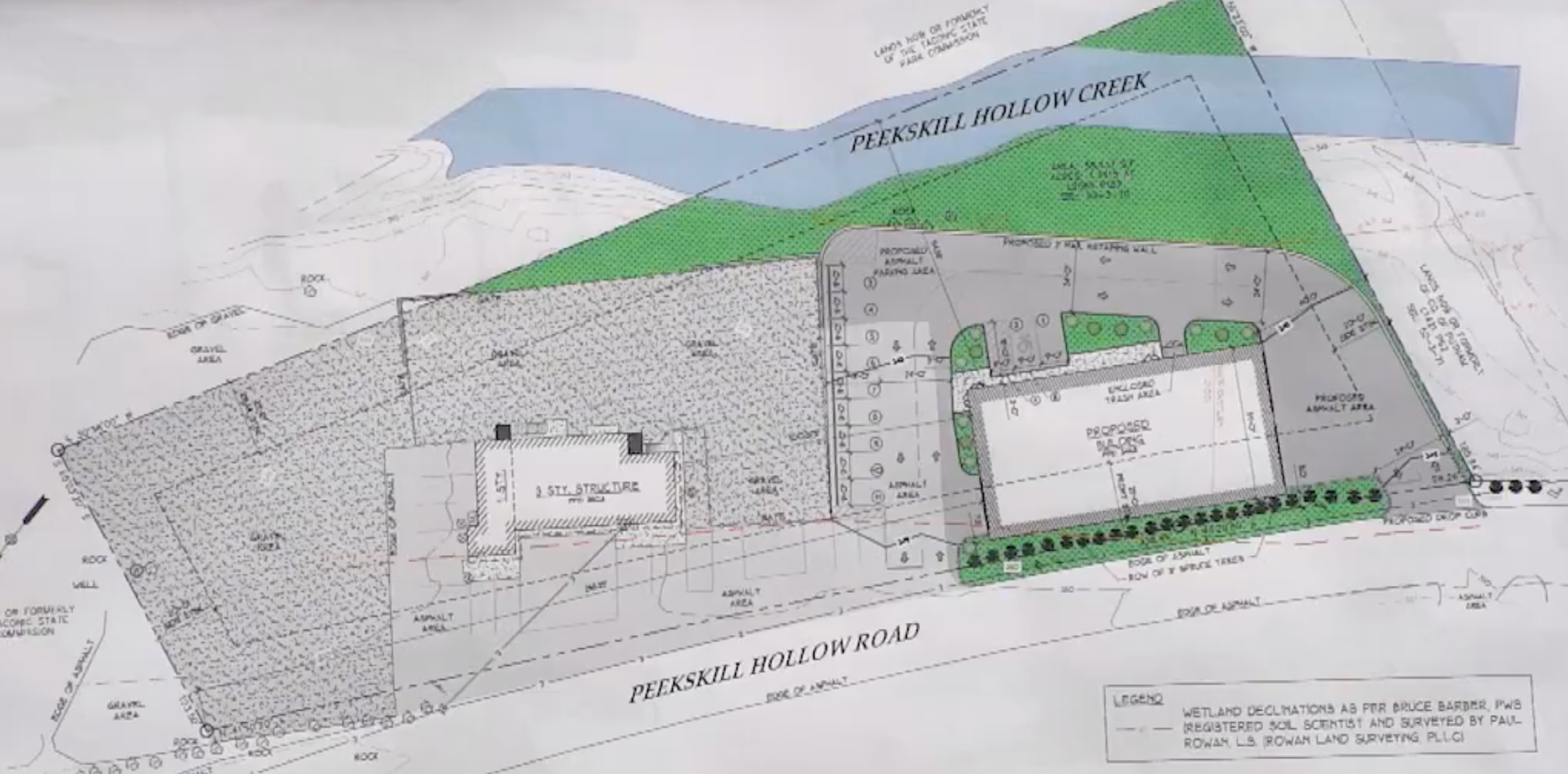
That was unwelcome news to Patrick and Susan Cummings who have lived adjacent to the property for 40 years. Despite registering their concerns at a heated zoning board hearing in late January, Citywide's request to situate the building just five feet from the road was approved with one abstention, increasing the chance that the Cummings will one day find themselves staring at a massive wall.
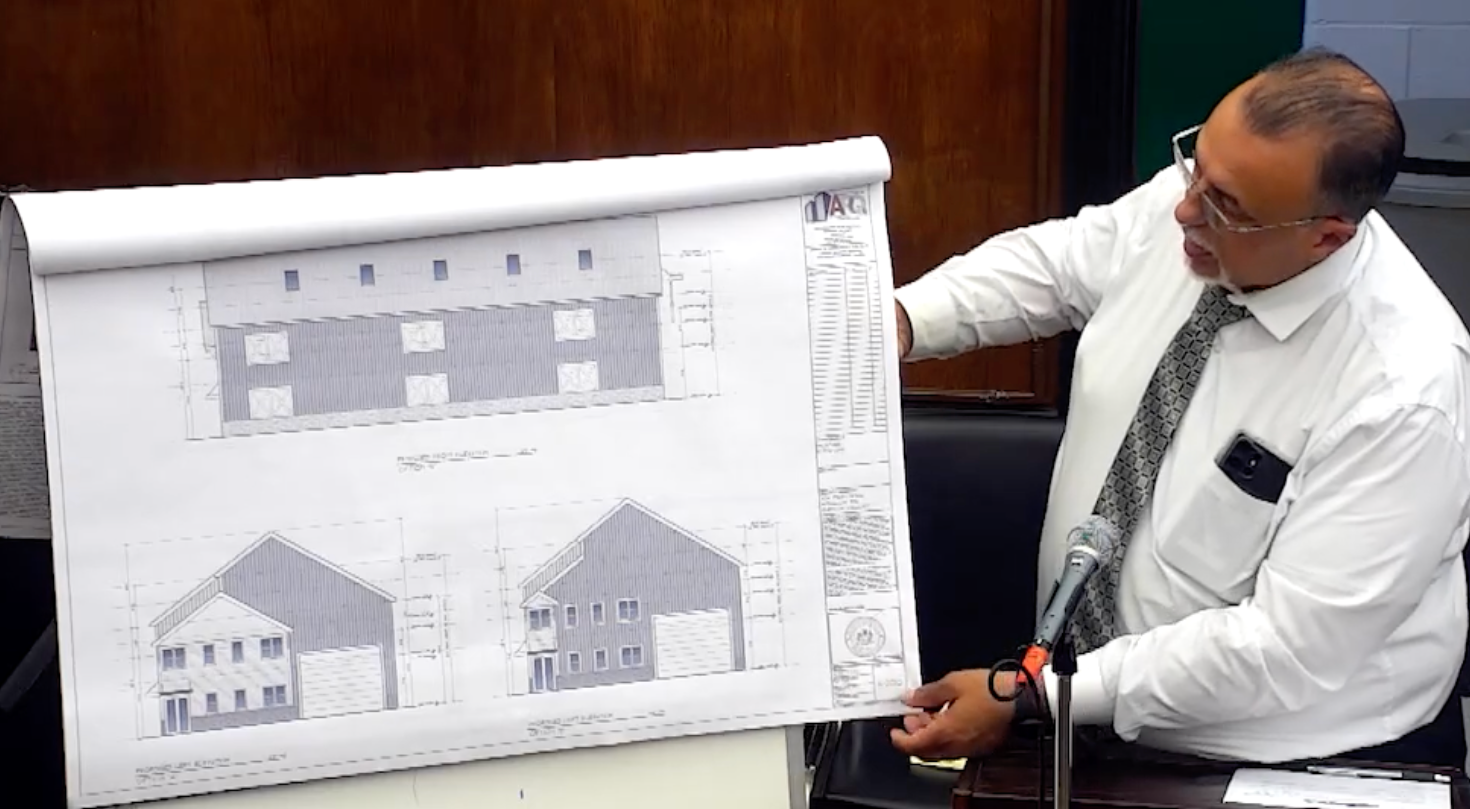
The Cummings say they feel particularly betrayed because until that point they thought they had a great relationship with the business' owners. But when Patrick Cummings asked one of them last year why a row of pine trees had suddenly been planted along the road, he says he was told it was to create a nice lawn for their dog to run around in. A Planning Board staff member, meanwhile, had already noted that the line of trees provides "natural screening" for the proposed building. Cummings only learned about the plans for what he calls "this monstrosity" when he received written notice a few days before the January Zoning Board hearing. "That feels bad," he said.
Although the town building inspector and Zoning Board members determined that Citywide's application conformed to the town's zoning code, Susan Cummings pleaded with them to reconsider. As Citywide has morphed from a local auto repair shop to a major towing and impound service for the entire region, she maintains that the business is no longer appropriate for an area zoned as "neighborhood commercial". Citywide is now taking in "lots and lots of large diesel trucks. They are now towing the big trucks with big trucks. That’s not commercial zoning for the neighborhood. The neighborhood auto repair shop? Perfect, love it… This type of business does not belong in CN [commercial neighborhood] zoning,” she said.
Citywide did not respond to requests for comment, but at least one of its neighbors has offered support. At the Zoning Board meeting, a letter was read into the record from Anthony Proetta, Jr., a member of the town's Volunteer Fire Department who resides at 811 Peekskill Hollow Road. He praised their service to his family's cars and noted that Citywide repairs emergency vehicles for Putnam Valley and nearby towns and are first responders themselves. "Twenty-four hours a day, seven days a week, Citywide is out in all weather conditions, removing damaged vehicles from the Taconic State Parkway," Proetta wrote.
The question of how far Putnam Valley should go to support local businesses like Citywide, while assuring a reasonable quality of life for nearby homeowners was the subject of proposed legislation to revise commercial neighborhood zoning last year. But after two lengthy public hearings at which residents universally decried the proposal, that process has been put on hold.
That leaves Citywide and the Cummings locked in a battle based on the laws currently on the books. Here are some of the main points that will be contested in future Planning Board hearings:
• The current zoning for the commercial residential (CN) district where Citywide is located allows for auto repair companies and service stations but doesn't specifically allow for auto storage. Should the proposed use of the new building even be allowed?
• Has there been sufficient environmental review of the potential for oil and solvents to leak from the damaged trucks into the wetlands and Peekskill Hollow Creek, especially given the increasing occurrence of major floods? The town's planning consultant Bruce Barber asked about this at last June's Planning Board review: "When you’re saying a secure facility, you’re going to be bringing in damaged vehicles to be stored there, which have a propensity to leak fluids and all that sort of stuff... how it’s going to be handled so groundwater's not going to be contaminated?" The state's Department of Environmental Conservation has yet to weigh in, and according to town engineer Todd Atkinson, "If the DEC says it's not going to work, it's not going to work."
• How valid is the argument that the tree line provides adequate screening? Citywide's architect says they will grow a foot and a half a year and that in five years, neighbors will hardly see the building. Planning Board member Tom Carano was skeptical: "The berm isn't big enough to support the trees now, they're just about ready to blow over," he said. Add in the inevitable damage from road salt and their location underneath power lines and those trees' lifespan may be short.
• The Zoning Board approved Citywide's request to set back its building just five feet from Peekskill Hollow Road. They said they based their decision on the fact that five feet was the same variance given in 2017 to Joe Palumbo's Soccer Academy, also on Peekskill Hollow Road, and they thus had to adhere to that precedent. Richard Quaglietta, the town's building and zoning inspector, said that if they didn't do that, "that’s pretty much a lawsuit waiting to happen." However, the Palumbo variance doesn't appear to be analogous. Palumbo's architect asked the Zoning Board to reduce the setback from the property line by five feet, from 25 to 20 feet. And the property line was, in turn, about 20 feet back from Peekskill Hollow Road. Susan Cummings maintains that if businesses are automatically given permission to locate five feet from Peekskill Hollow Road, the area will turn into Rt. 6.
This battle is likely to go on for months and litigation could well be in everyone's future. In an apparent nod to that potential, at its February 9th meeting the Planning Board immediately went into executive session to obtain "legal advice". To address some of its neighbors' concerns, Citywide has already announced that it will reduce the height of its proposed building by four feet, though that's unlikely to resolve the issue. As the town struggles to come up with new zoning laws that balance support for local businesses with satisfying nearby homeowners, Citywide's proposal will serve as an interesting test case.
If you're not already a subscriber but would like to receive future stories, please click on the subscribe button at watchingputnamvalley.com and provide your email address. If you have ideas for future stories or want to provide feedback, please send an email to watchingputnamvalley@gmail.com.